When you begin your journey into renewable energy, understanding how a solar inverter works is one of the most important steps. The inverter has a vital role in your solar system. It converts the direct current (DC) from your solar panels into clean and reliable AC power that manages your business, factory, or home. Without this conversion process, even the most advanced solar panels couldn’t run your daily systems.
This article is a beginner’s guide that is designed especially for business managers, industrial contractors, and solar suppliers who want reliable tools, all around the Middle East. No matter if your project is in Dubai, or Erbil, knowing how the solar inverter works helps you make smarter decisions for buying.
Imagine your solar panels should produce clean energy, but this energy isn’t in a usable form for your home or factory. They produce DC, but most of the electrical systems in your homes or your factories need AC. The main function of a solar inverter is to:
If you are new to solar systems, think of this as your first step in understanding how energy becomes usable. A solar inverter acts as the brain of your solar setup it not only converts DC to AC but also ensures your power remains stable, safe, and efficient. This short guide helps you see the inverter’s role clearly before you decide which type best fits your project.
For example, when the sun is shining during the day and powers your panels, your inverter continuously controls the flow, keeps the voltage stable, and protects your system from electrical damages or energy losses. This process not only optimizes your solar energy but also keeps your business efficient, even under different climates.
Unlike traditional systems, modern solar inverters also have the function of advanced monitoring. They monitor energy production, identify the faults, and allow you to check everything remotely by smart applications. So they are good choices for engineers or project managers, who pay attention to both performance and peace of mind.
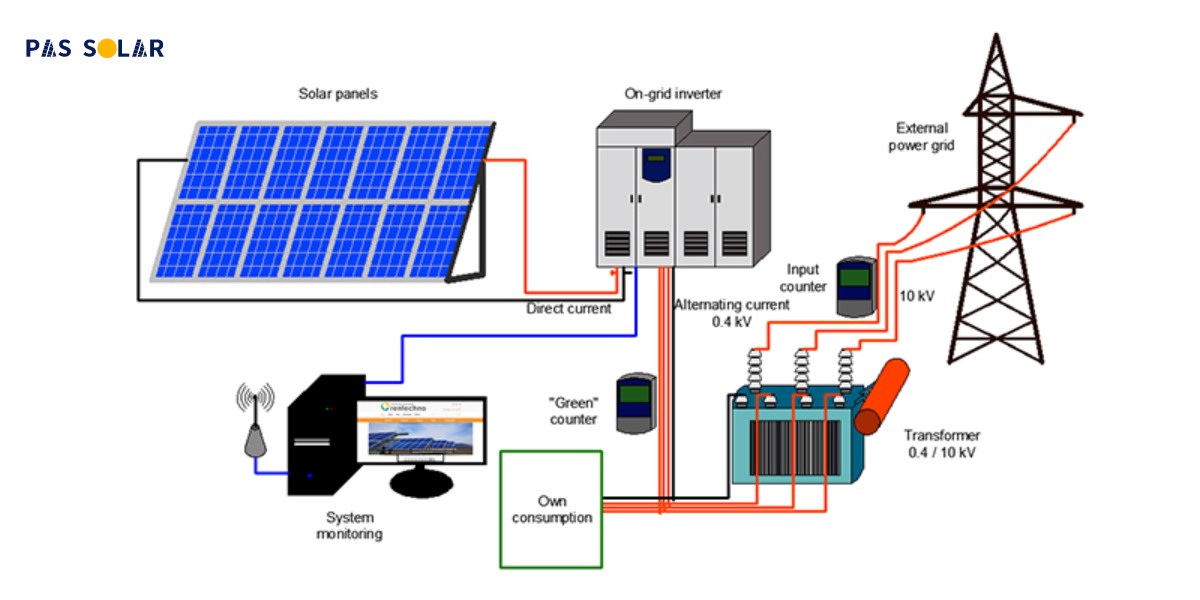
To understand how a solar inverter works, imagine it is a bridge between your solar panels and your electrical devices. Your panels produce DC power, but your electrical systems need AC. The inverter converts and manages this power, but making sure every part of your project performs well.
When sunlight hits the panels, electrons begin to move inside the cells and produce DC electricity. The inverter takes this energy and pushes it through a set of electronic components known as IGBTs (Insulated Gate Bipolar Transistors). These switches turn the DC on and off rapidly about thousands of times every second, shaping it into a clean AC sine wave that fits with your grid or standalone system.
Let’s see the solar inverter working principle into a few clear and simple steps:
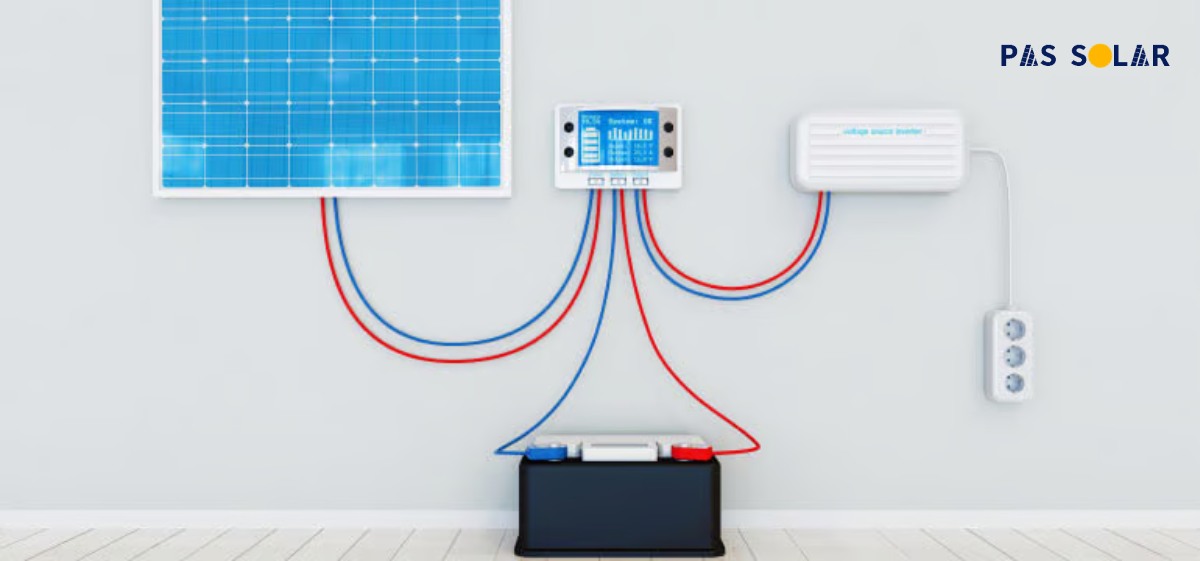
These steps repeat continuously as long as sunlight is available. In hybrid inverter or off-grid systems, it may also work with batteries to manage energy storage and discharge cycles efficiently.
If you are using lithium batteries, you can read our blog about How to Size a Solar Lithium Battery for Your Home System.
| Step | Function | Description | Key Component |
| 1 | Input DC Power | Receives direct current from solar panels | PV array |
| 2 | Conversion Process | Switches DC to AC using transistors | IGBT / MOSFET |
| 3 | Synchronization | Matches phase and frequency with grid | Control circuitry |
| 4 | Output Delivery | Supplies clean AC to load or grid | Output terminal |
| 5 | Protection and Feedback | Check the performance and faults | Sensors / MPPT controller |
for reliable solar inverter suppliers that provide high efficiency models with strong warranty and after sales service locally.
After understanding how a solar inverter works, it is essential to know thatEach inverter type works differently and has a unique purpose depending on your project and grid needs. Choosing the right model can make a significant difference.
String inverters: For small to medium projects, such as a commercial building, string inverters are often the good choice. They offer an affordable, easy to maintain production and they have simple design. Even a single shaded panel can affect the efficiency of an inverter, which is something to keep in mind when planning rooftop layouts.
Microinverters: For residential and small projects or solar locations, microinverters provide a fine solution. Each solar panel works independently, delivering maximum power from every panel, even when shadows affect part of them. While the initial cost is higher than the cost of string inverters, microinverters are better and have more control and stability for smaller projects.
Central inverters: For large industrial projects, such as factories in Dubai or Erbil, central inverters can be the most suitable choice. These inverters are designed to manage large amounts of power efficiently and make system maintenance easier. They need more space for installation, but for large projects, their stable performance and durability make that a fair trade
Hybrid inverters: Some projects that need on-grid and off-grid systems with batteries should use hybrid inverters. If you want to store energy for later use or have stable power in areas with uninterrupted grids, hybrid inverters provide flexible and advanced functions. Although they have a higher price, the flexibility and performance of this inverter make them a smart investment.
Recognizing each type of inverter allows you to select the best solution for your project, location, and requirements of energy. By doing this, you can maximize your solar energy investment, whether you are in, Dubai, Erbil, or other places.
For more detail on selecting the right inverter, click on Types of Solar Inverters: Which One Is Right for Your System?
When planning your solar project, understanding the solar power inverter and solar power dubai price helps you make a smart investment. The cost of an inverter varies depending on several key factors such as power capacity, inverter type, brand reputation, and included technology features.
Here are the main elements that influence the solar inverter price:
Type of inverter:
Microinverters are usually the most expensive per watt, while string inverters are more affordable. Central and hybrid inverters often come at higher prices due to their power handling and advanced controls.
Power rating (capacity):
Higher wattage models designed for industrial systems cost more but provide better long-term performance and durability.
Brand and warranty:
Global brands with strong after-sales service (like SMA, Huawei, or Fronius) may have higher initial costs but offer longer warranties and reliability.
Smart features:
Inverters with MPPT tracking, remote monitoring, and hybrid battery management usually add 10–20% to the total price.
Region and logistics:
In the Middle East, local suppliers in Dubai, or Erbil may offer different prices depending on import taxes, logistics, and warranty coverage.
If you want to have a plan for your solar project, whether it is a small and simple system, or industrial scale and complex, understanding How Does a Solar Inverter Work will give you a bunch of advantages. It helps you have enough information about buying decisions.
At Pas Solar, we help contractors, engineers, and distributors around the Middle East in order to access high quality solar equipment without any middlemen from valid manufacturers. We provide clear pricing, and international delivery, so you can focus on growing your business.
Contact Pas Solar today to find the best inverter, battery, and panel for your energy needs.