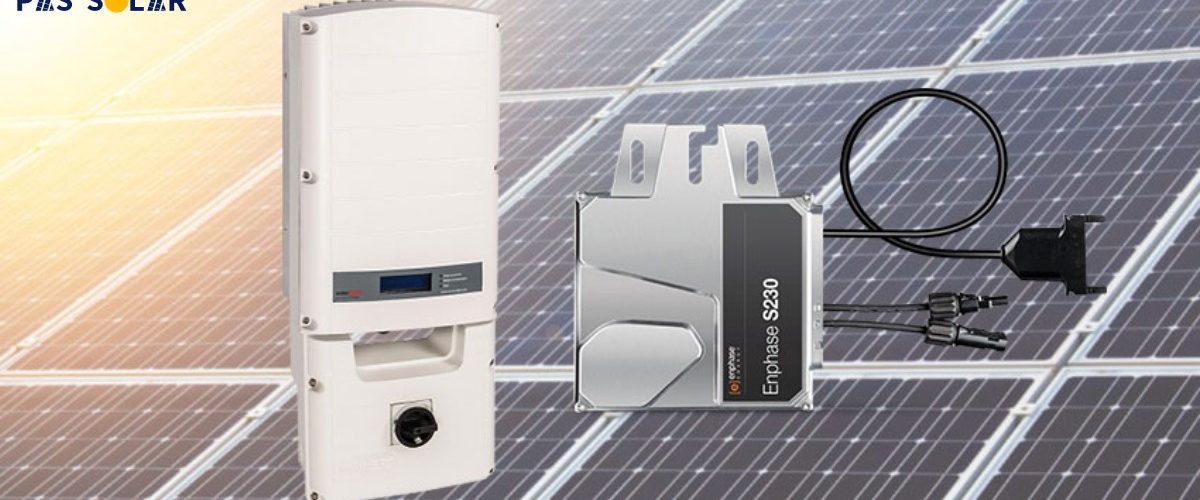
While you are going to build a reliable solar energy system for your buildings such as home, office, or industrial project, one of the most important decisions is selecting the types of solar inverters that are suitable for your energy demands. Actually the inverter has the central role of your solar system. It converts DC electricity from solar panels into usable AC power. So picking the right type not only helps you to maximize the efficiency but also protects your investment in lithium solar batteries and other system components.
For industrial men and women, solar system contractors or distributors in Iraq, UAE, or other parts of the Middle East, choosing the right option means the best combination of performance, cost, and lifespan. There are different inverter types on the market, like String Inverters, microinverters, central Inverters, hybrid Inverters. Understanding their strengths, limitations, and applications can allow you to have a successful solar project.
| Inverter Type | Typical System Type | Description |
| String Inverters | On-Grid | Mainly used in systems connected to the grid, where generated electricity is sent directly to the utility grid or used to offset direct energy demand |
| Microinverters | On-Grid | Installed on each panel, ideal for small residential or commercial grid-connected systems. |
| Central Inverters | On-Grid | Used for large industrial scale systems connected to the grid. |
| Hybrid Inverters | Both (On-Grid and Off-Grid) | Works in both on-grid and battery-powered off-grid with battery storage, ideal for systems with lithium solar batteries |
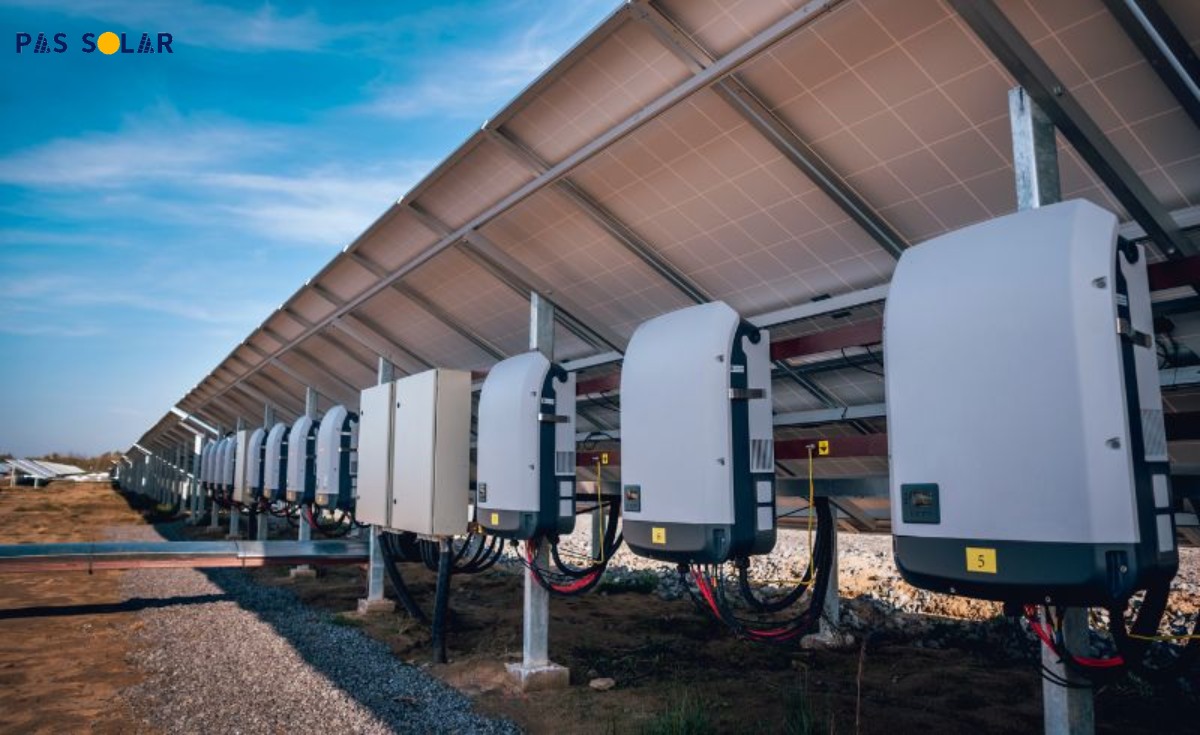
String inverters are one of the most popular systems for residential and small commercial solar setups. They connect a series of solar panels that are introduced as a string to a single inverter, and they convert DC to AC power efficiently.
Recommended For: Homes or small projects where panels face the same direction and shading is at the low level.
Pas Solar Insight: Although string inverters are affordable, they can struggle with performance when panels are shaded. so they’re not highly recommended for cloudy weather or shaded environments.
Microinverters are small inverters that are installed on each individual panel, and allow panels to work independently. This is the best inverter for rooftops with irregular layouts or areas that experience partial shading
Recommended For: Residential or commercial rooftops with panels facing different directions or experiencing partial shade.
Pas Solar Insight: Although the initial cost is higher than string inverters, the improved efficiency can pay off the investment. We recommend you to use this inverter especially for rooftops in urban industrial regions.
For large commercial or utility-scale projects, central inverters are the go-to solution. They handle high power from many strings of panels, providing centralized control and monitoring.
Recommended For: Factories and large solar farms can be good candidates for installing central inverters.
Pas Solar Insight: Central inverters are a smart investment for large projects. Their durability and lower maintenance make them ideal for industrial environments. For factories or solar farms, choosing a central inverter can maximize your efficiency and simplify your system management.
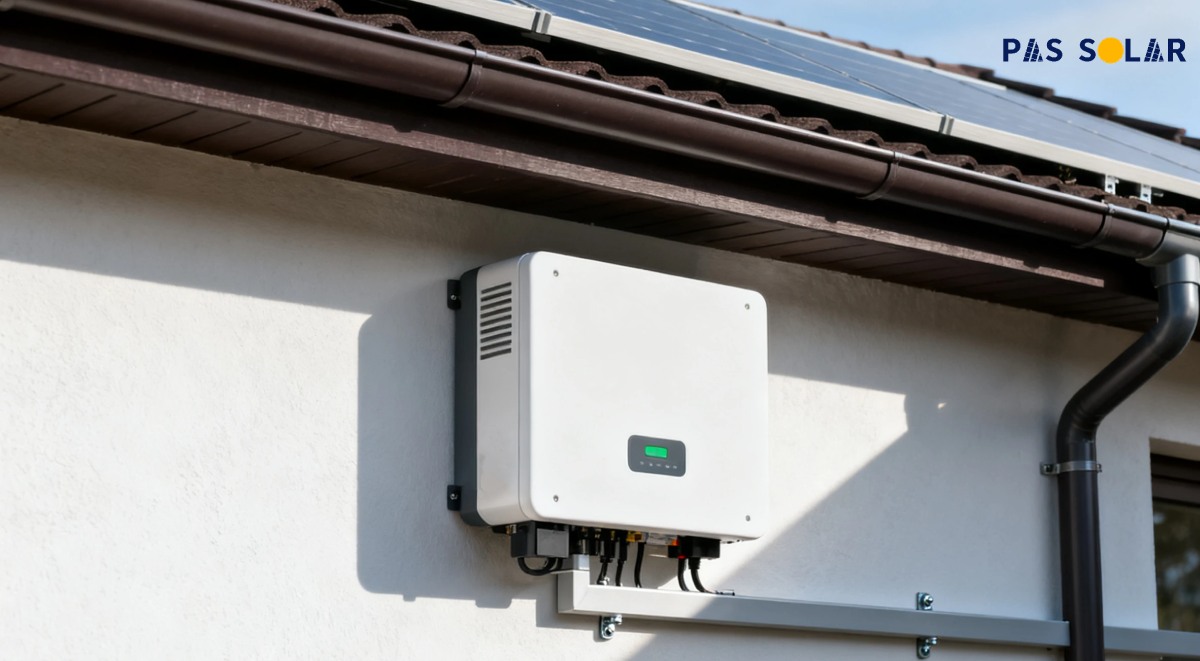
Hybrid inverters are designed to work with both on grid and off grid systems. If your project has lithium solar batteries, a growatt hybrid inverter is often the smartest choice. It allows automatic switching between solar, battery, and grid power, optimizing energy usage and helping experience uninterrupted electricity.
Recommended For: Homes or commercial projects that need battery backup and they want flexible energy management. They can also be used for areas with unstable grid connections.
Pas Solar Insight: For more information on battery integration, see our guides on Top Advantages of Solar Lithium Batteries Over Lead-Acid
| Inverter Type | Ideal For | Pros | Cons |
| String Inverter | Residential and small systems | affordable, simple installation | Not suitable for shading area |
| Microinverter | Rooftop systems with shading or multiple orientations | Independent panel-level performance control, easy expansion | Higher cost for starting project |
| Central Inverter | Large commercial and utility-scale systems | good for large projects, lower maintenance | need dedicated space, high capacity |
| Hybrid Inverter | Homes with battery backup and grid connection | Energy storage support, flexible usage | More complex setup, higher cost |
For selecting the best solar inverter for home/office, you should considers:
Selecting the best solar inverter for your home or office depends on your energy demand, system layout, and battery needs. For most homes, string inverters or hybrid inverters are reliable options, offering efficiency and affordability.
Offices or small commercial buildings with variable shading may benefit from microinverters for better performance monitoring. Always check battery compatibility especially if using lithium solar batteries and ensure the inverter includes a warranty and certified components.
customers often prioritize competitive pricing, original products with warranty, and availability for quick delivery. Comparing solar inverter price in UAE or checking the solar inverters price list for your area can help you to make a fast and the best decision.
Always recognize the inverter well and pay attention to certifications. Purchasing from a trusted supplier like Pas Solar lets you have reliable after sales service, specially for large scale projects with high investment.
Evaluate your energy needs and the size of your solar system.
Choose inverter efficiency above 95% for maximum output.
Match the inverter with solar lithium battery systems if storage is required.
Check inverter certifications and warranty coverage before purchase.
Review the solar inverters price list and compare suppliers for the best deal.
Prefer trusted distributors in your region (UAE, Iraq, etc.) for genuine solar inverters for sale and after-sales support.
The price of solar inverters depends on the type, capacity, and technology. But long term value is more important than initial cost. String inverters have a good budget for small systems, while microinverters with more expensive prices increase efficiency in irregular rooftops. Central inverters are designed for large scale projects with durable, minimal maintenance performance, and hybrid inverters deliver smart energy management with battery backup for both on-grid and off-grid applications. Investing for the right inverter , especially when paired with lithium solar batteries lets better efficiency, lower energy costs, and a stronger profit.
Selecting the right types of solar inverters is more than a buying decision. You are investing for efficiency, reliability, and energy savings. For industrial distributors, project managers, and factory owners matching your choice with system size, shading conditions, and battery storage in order to optimal performance.
Pas Solar provides high quality inverters, fast international delivery, and support for bulk orders. By understanding your options (string, microinverters, central and hybrid systems), you can select the right inverter for your solar project, protect your lithium solar batteries, and achieve predictable energy savings.