Solar energy systems are more advanced, efficient, and accessible than ever before. But even the best solar panels cannot work well without a correctly installed inverter system. In most projects, one of the biggest solar system problems is not caused by the panels, it is due to wrong inverter installation and wiring mistakes.
A solar inverter has a really key role in a photovoltaic system. It converts the electricity which is produced by solar panels into usable energy while making sure power flows safely and efficiently through the whole system. Even a tiny error during installation can have an important effect on the efficiency of a system, safety of components, and the lifespan of the whole system.
| # | Common Mistake | Description | Possible Consequences | Correct Practice | Pro Tip |
|---|---|---|---|---|---|
| 1 | Incorrect Inverter Sizing | Choosing an inverter that does not match solar array capacity | Energy loss, clipping, system instability | Calculate DC/AC ratio properly (typically 1.1–1.3) | Always design based on peak load and expansion plans |
| 2 | Poor Cable Sizing | Using undersized DC or AC cables | Voltage drop, overheating, fire risk | Follow IEC/local standards for cable sizing | Keep voltage drop under 2–3% |
| 3 | Wrong Polarity Connection | Reversing DC positive and negative wires | Immediate inverter damage | Verify polarity using multimeter before connection | Label all cables clearly |
| 4 | Improper Grounding (Earthing) | Missing or weak grounding system | Electric shock, equipment damage, lightning risk | Install proper earthing rods and bonding | Ground PV array, inverter, and structure |
| 5 | Installing Inverter in Hot Location | Mounting inverter under direct sunlight or poor ventilation | Overheating, reduced lifespan, shutdown errors | Install in shaded, ventilated environment | Maintain airflow clearance per manufacturer |
| 6 | Mixing Different Panel Strings | Connecting panels with different voltage/current specs | Mismatch losses, inverter errors | Use identical modules per string | Separate MPPT inputs properly |
| 7 | Loose Electrical Connections | Poor terminal tightening | Arcing, overheating, system failure | Use torque specifications from manual | Re-check terminals after first operation week |
| 8 | Incorrect DC Isolation | Missing DC isolator or improper placement | Unsafe maintenance conditions | Install DC disconnect near inverter | Required in most electrical codes |
| 9 | No Surge Protection | Ignoring lightning or surge protection devices | Inverter destruction during surges | Install SPD on DC and AC side | Especially critical in lightning-prone regions |
| 10 | Improper AC Wiring | Wrong phase connection or grid wiring | Grid faults, inverter shutdown | Follow grid standards and phase sequence | Verify voltage before startup |
| 11 | Ignoring Manufacturer Manual | Installing based on experience only | Warranty void, incorrect operation | Follow installation guide strictly | Every inverter model differs |
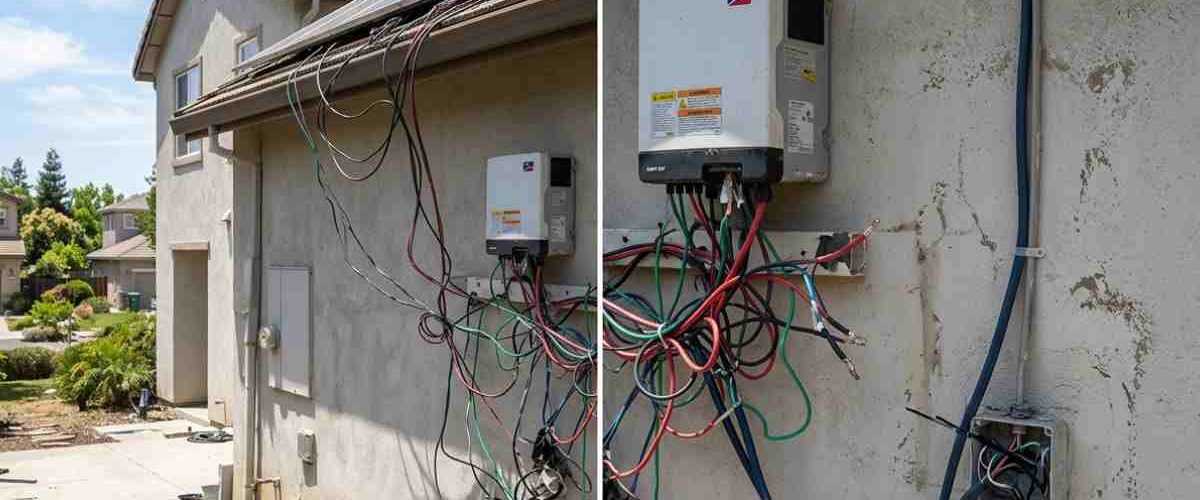
| 12 | Poor Cable Management | Cables exposed or tangled | Mechanical damage, maintenance difficulty | Use conduits and cable trays | Keep DC and AC cables separated |
| 13 | No Monitoring Setup | Monitoring system not configured | Faults go unnoticed | Configure WiFi/LAN monitoring | Enables remote diagnostics |
| 14 | Incorrect Battery Wiring (Hybrid/Off-Grid) | Wrong battery voltage or polarity | Battery damage, inverter failure | Match battery voltage & communication protocol | Verify BMS compatibility |
| 15 | Lack of Protection Devices | Missing breakers or fuses | Fire hazard, unsafe system | Install proper DC/AC protection | Follow electrical protection hierarchy |
| 16 | Long DC Cable Runs | Excessive distance between panels and inverter | Energy loss | Keep inverter close to array | Prefer higher voltage strings |
| 17 | Blocking Cooling Fans | Installing inverter in enclosed cabinet | Thermal shutdown | Maintain ventilation clearance | Check airflow periodically |
| 18 | Improper Commissioning | System turned on without testing | Startup failure | Perform checklist commissioning | Test insulation resistance |
| 19 | Incorrect Firmware Setup | Old firmware or wrong region settings | Performance issues | Update inverter firmware | Check grid code configuration |
| 20 | No Maintenance Planning | System installed but never inspected | Gradual efficiency loss | Schedule annual inspection | Preventive maintenance saves costs |
Unfortunately, the importance of proper wiring, grounding, ventilation, and configuration is frequently ignored by homeowners and inexperienced installers. Even small problems like loose cables or wrong inverter placement can slowly affect system performance
From loose cable connections to incorrect inverter placement, these issues can quietly affect the performance of a system for years before any visible signs appear.
We will explore the most common mistakes in solar inverter installation and wiring, explain how they impact the performance of the solar system, and show how to avoid problems.
Not only does a solar inverter convert electricity, but its installation and the Growatt inverter price also affect how safe and efficient the entire system is.
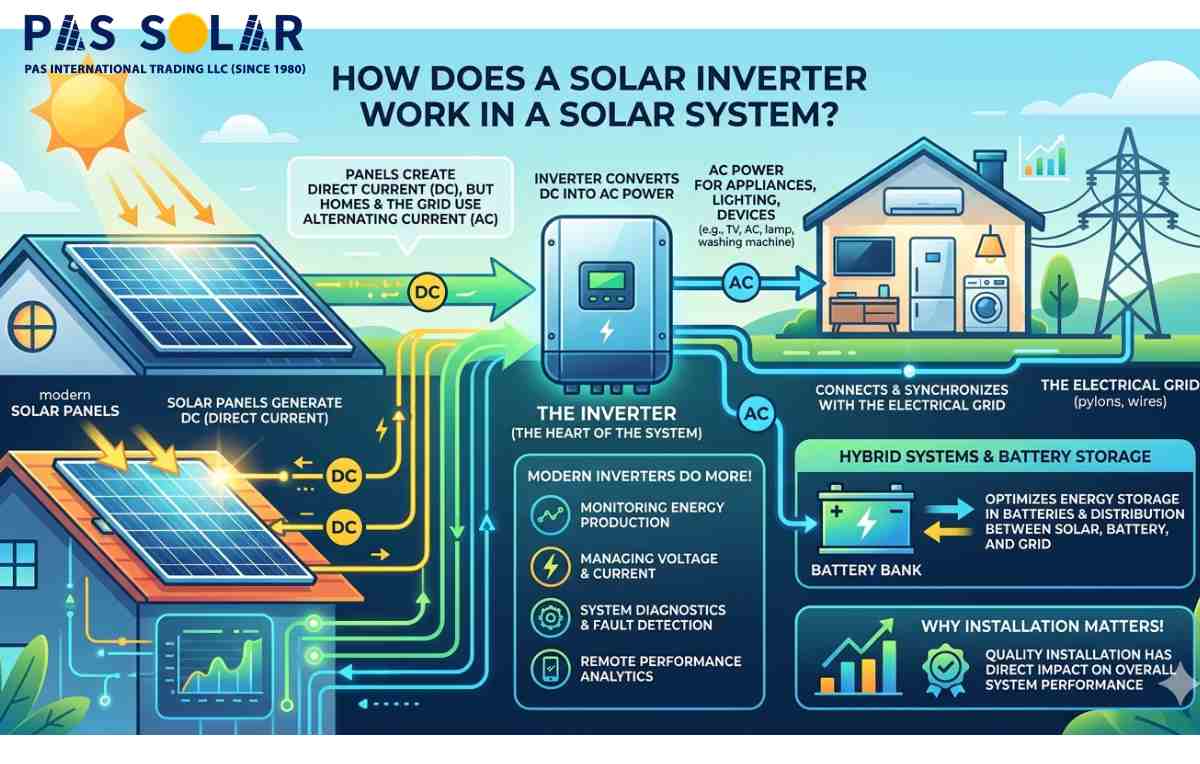
Solar panels generate direct current (DC), but homes and the electrical grid need AC power. The inverter converts DC power into AC electricity in order to appliances, lighting systems, and electrical devices to work safely.
Modern inverters do more than just convert power, they also perform several additional functions, such as:
In hybrid systems, the inverter also controls how energy is stored in batteries and distributed between solar panels and the electrical grid . Because the inverter is responsible for different operations, installation quality has a direct impact on performance of the overall system.
If you install the inverter incorrectly, you will create a chain of technical and safety issues. Sometimes problems appear immediately, but in some others, they develop slowly during the time.
Some of the typical results include:
Most solar inverter installation mistakes come from poor planning, wrong component choices, or improper wiring practices. Even small errors in inverter wiring can significantly reduce efficiency and increase the operational costs over the time.
Many installation problems start even before the inverter is mounted on the wall. One of the most common reasons for incorrect inverter installation is poor system planning.
Surely, different solar systems need different inverter types. Choosing the wrong one can cause performance and compatibility issues later within the system.
String inverters are a typical option in residential systems and connect multiple solar panels into one circuit. They are reasonable options but they may experience performance losses if one panel underperforms.
Microinverters are installed on the back of each individual panel. They work better in shaded environments and let each panel work on its own.
Hybrid inverters work with both solar panels and batteries within a single system. They are the best choice for homeowners who want to add battery storage later in future.
Choosing the wrong type of inverter for a home layout or energy needs can cause installation problems later.
Connecting between solar panels, batteries, charge controllers, and inverters is so important.
Installers must check:
Not following compatibility requirements can lead to performance issues and permanent equipment damage.
Inverter sizing mistakes are so common and installers make this mistake. An undersized inverter may work at maximum capacity, which leads to energy losses and overheating issues. But an oversized inverter may work inefficiently during periods of low solar production.
Keeping a balanced DC to AC ratio, alongside a high-quality Solar Lithium Battery in Dubai, is so important for stable system performance and long-term reliability. For hybrid solar systems that include battery storage, comparing the growatt wit 15kw price can help when evaluating inverter options based on system capacity and long-term energy needs.
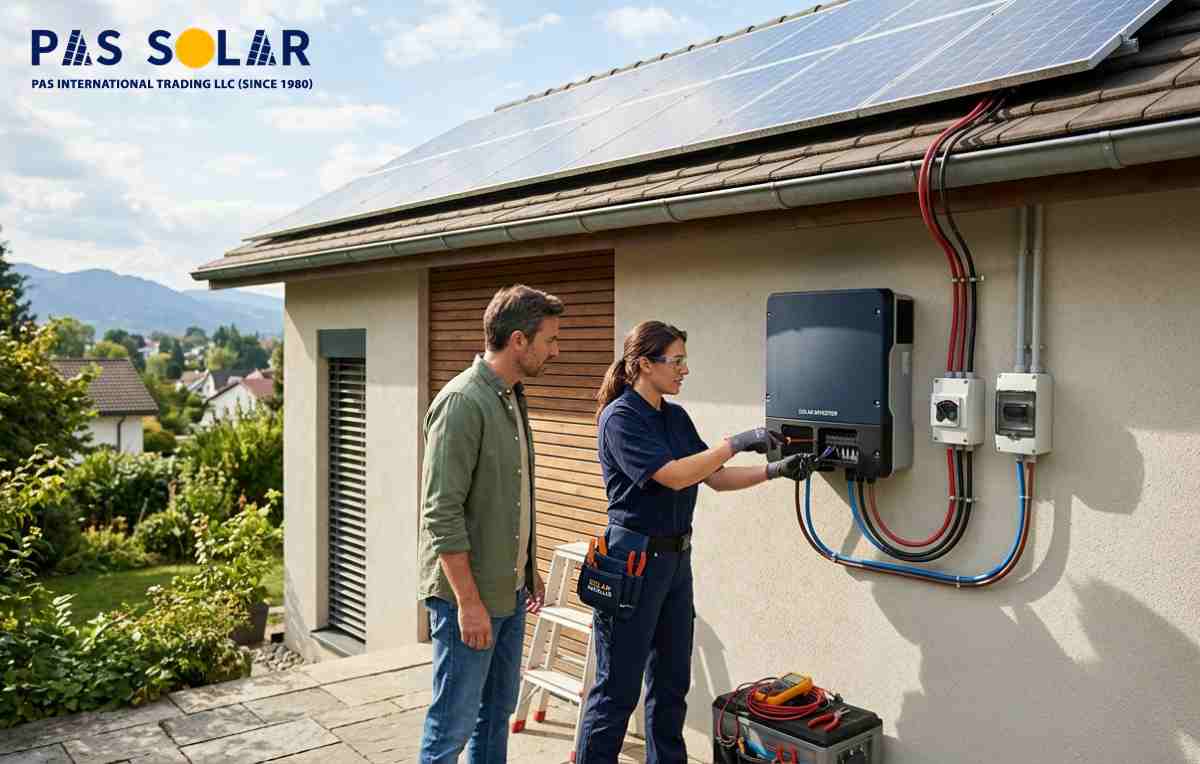
Knowing the correct installation process lets you recognize the mistakes easier.
Professional installers check:
good planning helps you to prevent issues that may happen in future with wiring and efficiency
The inverter must be installed on a secure surface with enough airflow around it.Outdoor systems need protection from weather and enough space for cooling.
The installer connects:
At this step, correct polarity and suitable cable sizing are really important for system performance.
Good grounding keeps the system safe and it is not dangerous for users. It keeps them from electrical damage and lightning problems.
Before starting the system, you should check the set up, and make sure about voltage stability, grounding integrity, and communication functions. If you skip this step, it becomes a common installation mistake.
This is where most of the long term solar system problems begin.
Unsuitable inverter placement is one of the most common installation issues. Many inverters are installed in hot and humid regions, areas with poor airflow and in direct sunlight. Heat is one of the biggest enemies of inverter performance. High temperatures can reduce the efficiency of a system and make components wear out faster.can make the inverter overheat and turn off temporarily.
The inverter should be installed in a shaded area which is dry, and has high ventilation. It must be protected from dust and moisture.
Incorrect DC and AC wiring is one of the most dangerous errors for inverter wiring. Common wiring issues in solar inverter installation usually happen due to the critical mistakes during setup. For example, when positive and negative wires are connected incorrectly, reverse polarity happens. It can stop the system or sometimes hit the inverter.
Loose terminals are another problem and can cause bad contact , overheating, and unstable performance. Bad cable routing can damage wires and make maintenance process more difficult, while wrong wire sizes can cause overheating or energy loss. In serious cases, mixing AC and DC wires can stop the system and increase safety risks.
totally, these mistakes can reduce the efficiency of a system and create significant electrical risks if not addressed properly during installation.
During solar inverter installation, common wiring issues usually occur due to small but important mistakes in the setup process. Loose terminals are another problem that you will experience poor electrical contact, overheating, and unstable performance. Improper cable routing may face wires to damage and make maintenance harder.
In more serious cases, Incorrect AC and DC connections can cause system failure and safety risks . In several cases, the inverter may stop completely.
Incorrect wiring may cause arc faults, short circuits, inverter damage, fire risks, and overall system instability. All of these mistakes can reduce system efficiency and create serious electrical hazards if they are not fixed during installation.
Without proper grounding, fault currents cannot move safely through the set ups, which increases the risk of electrical shock. It also makes lightning protection less effective and leaves equipment more vulnerable to power surges. During this time, this can damage important components like the inverter and reduce total system safety and reliability. Improper grounding is one of the leading causes of solar inverter safety failures.
Every inverter has several limits, and exceeding them can cause internal damage and reduce overall system reliability.
Oversized panels mean the solar panels are too large for the inverter to manage them properly. In this condition, it can waste energy and reduce performance. Incorrect string design happens when solar panels are not grouped well, which leads to uneven system performance . Poor matching for inverters happens when the inverter is not sized or selected for the system, resulting in reduced efficiency. Adding more panels without checking the capacity of the system can overload the inverter and damage the performance.
A well designed system is essential for preventing overload problems and keeping stable performance.
Cable management has a direct impact on both the safety and performance of a system. So each problem such as messy or exposed cables can cause:
Bad cable routing can cause overheating and voltage drop, and finally it can fail the system performance.
cables should be installed in a way that improves safety and also boosts the performance of the system. Using UV-resistant conduit helps protect cables from UV or sunlight damage. Securing cables suitably avoids movement and physical wear during the time. protecting sharp bends decreases stress on the wires and improves durability. Separating AC and DC wiring (if possible) helps prevent interference and safety problems. Finally, clearly labeling all wiring helps the users to maintain and troubleshoot much easier.
Even a perfectly installed system can still fail if the software settings are wrong. Small setup mistakes, like wrong grid settings, wrong battery profile, incorrect voltage range, or wrong operating mode, can all make issues. These problems may lead to communication errors, unstable power, or charging problems, especially in hybrid systems.
Some installers hurry the final inspection to save time which can cause problems. This is a serious mistake. Without testing, hidden wiring problems may remain undetected until they cause damage later.
Testing is one of the most important steps in preventing long-term solar system installation problems.
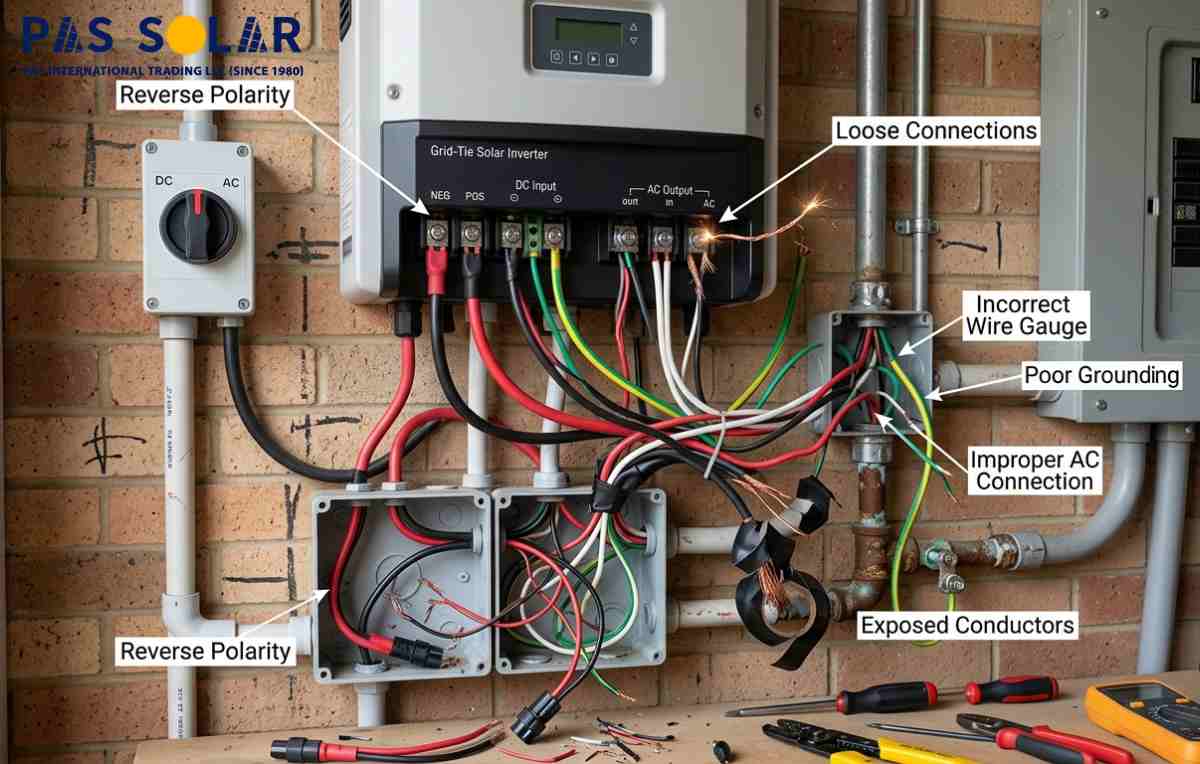
Certain wiring mistakes appear repeatedly in failed solar installations.
Connecting positive and negative wires incorrectly can instantly damage the inverter.
Loose terminals can increase resistance and heat, which can create fire risks.
Too small cables, especially in larger systems, create voltage drop and overheating problems.
Using unmatched cables can reduce safety and increase electrical resistance.
Wrong protection devices may not stop faults during electrical problems.
These solar inverter installation mistakes can be easily avoided by following proper installation standards.
Some installation problems become visible through warning signs. Some typical symptoms include:
If these symptoms appear, the system should be checked immediately by a professional installer.
If you follow the solar inverter safety tip, you can reduce risks and improve the reliability of the system for a long period.
Every inverter model has unique installation requirements. Ignoring manufacturer instructions can void warranties and create safety issues.
Certified and high quality cables, connectors, breakers, and grounding equipment not only can improve reliability but also reduce failure risk.
Working on live circuits is so dangerous and it can increase the risk of electric shock. so you must shut down the system before maintenance or installation.
Professional installers know and follow important rules like electrical codes, grounding standards, correct system setup, and safety requirements to make sure the system works safely.
Regular checks help you to identify problems like loose wiring, corrosion, dust accumulation, blocked ventilation, and software issues. By preventive maintenance you can significantly reduce future repair costs.
Basic wiring knowledge helps homeowners understand how their solar system works.
As we said, solar panels send DC electricity to the inverter, then the inverter converts it into AC electricity for household use. Both sides of the system need to be safely isolated and protected.
Correct cable size prevents:
Long cables need to be thicker to keep the system efficient.
Proper grounding is essential for protecting the system from faults and surges and improves safety.
Solar systems often have different components such as circuit breakers, surge protectors, rapid shutdown systems, disconnect switches, and fuses to isolate faults and protect equipments.
Before starting the system, check polarity, connections, grounding, voltage level, and inverter settings to avoid startup problems which are so expensive.
Preventing problems is easier and cheaper than repairing them later.
Professional planning helps to make compatibility between all system components.
Panels, batteries, charge controllers, and inverters must work together correctly.
Experienced and professional installers reduce the installation mistakes and future issues.
Modern monitoring systems help you to detect abnormalities early.
Regular checks help systems to improve lifespan and work better.
Maintenance is often ignored until something fails. Simple care can help the inverter last much longer. Check electrical connections and make sure terminals are tight and clean. Keep ventilation areas free of dust to promote airflow and avoid overheating. Watch system performance for any sudden drops, and update inverter firmware when available to keep the system stable.
Professional installation is more than just convenience. Qualified installers make sure everything is done correctly, including electrical codes, using safe wiring methods, proper grounding, correct inverter sizing, and a reliable system setup. It also helps keep manufacturer warranties valid and reduces future repair expenses. Trying to install a solar inverter without proper experience or (Do It Yourself) can easily lead to expensive corrections later.
Choosing a reliable component is as important as proper installation. Pas Solar offers high quality solar options that are designed for long term performance, efficiency, and safety. Pas Solar uses advanced inverters and strong support to help build stable and efficient solar systems for homes and businesses.
No matter if you need solar inverter for residential or commercial applications, well designed solar systems reduce installation risks and improve long term performance.