
With the increasing demand for solar energy for cooling, solar technology has become a practical option for powering high consumption appliances such as air conditioners. However, finding out how it works? and how to use it efficiently? is important to getting the best performance
The good news is that you can run an air conditioner on solar power, but the way it works is more technical.
| AC Type | Average Daily Consumption | Recommended Solar Panels | Battery Needed? | Best System Type |
|---|---|---|---|---|
| 9000 BTU (1 Ton) | 6–8 kWh/day | 4–6 Panels | Optional | Hybrid |
| 12000 BTU (1.5 Ton) | 12–15 kWh/day | 8–10 Panels | Recommended | Hybrid |
| 24000 BTU (2 Ton) | 14–18 kWh/day | 12–16 Panels | Recommended | Hybrid / Off-Grid |
The exact number of solar panels required for an air conditioner depends on several factors, including sunlight hours, inverter efficiency, battery storage, and daily AC usage. However, the table above provides a general estimate for most residential solar AC systems.
Yes, it is possible to run an air conditioner with solar power, but not directly. Air conditioners need stable AC electricity, but solar panels produce DC power. That’s why every system needs a solar inverter for the air conditioner to convert energy.
Without this conversion system, the AC simply won’t work. So in real situation, what people call a solar AC system is:
| solar panels + inverter + batteries (sometimes) |
These components make it possible to run cooling systems using sunlight. However, air conditioners are among the most energy-intensive appliances in a home. This means that installing just a few solar panels is not enough; you need a properly sized and optimized system, which often includes a reliable storage solution like a Growatt battery. This is where many homeowners make mistakes. Without the right system design, performance can drop significantly, and overall costs may rise unnecessarily.
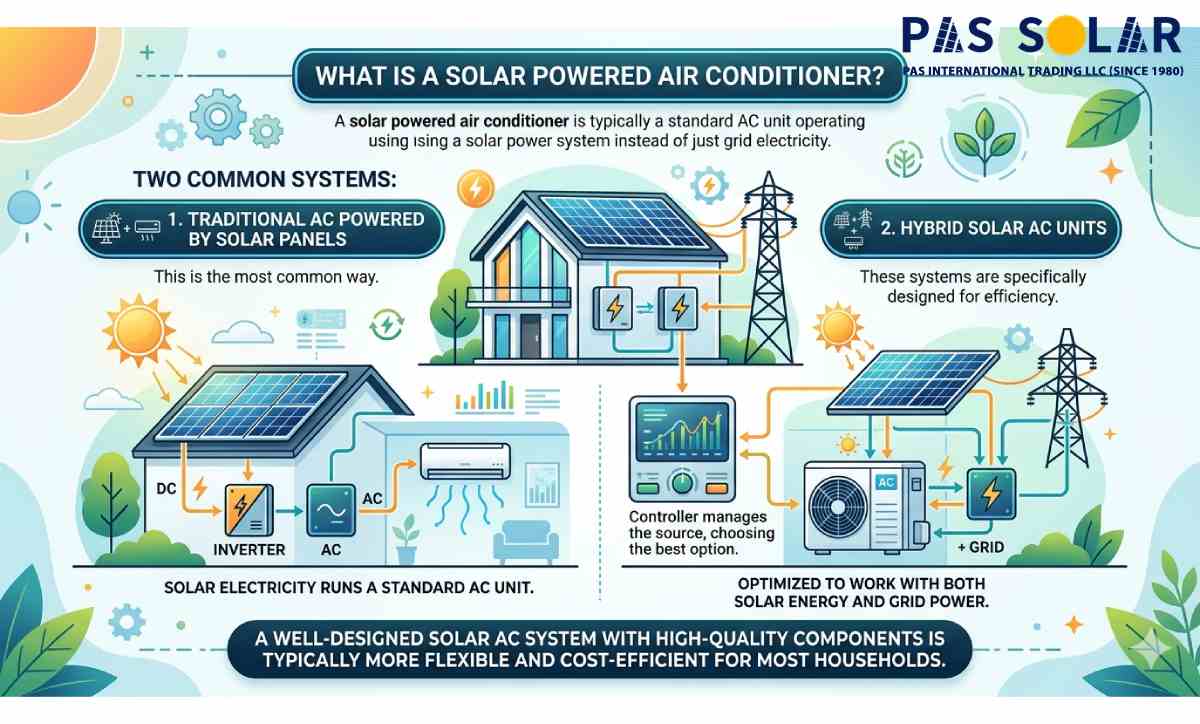
In most cases, a solar powered air conditioner is not usually a special type of AC. It simply refers to a regular air conditioner that operates using a solar power system instead of only electricity from the grid.
There are two common systems:
This is the most common way. Solar panels produce electricity that runs a standard AC unit.
These systems are specifically produced to work with both solar energy and grid power in order to improve efficiency.
While both options work, a well designed solar AC system built with high quality components is typically more flexible and cost efficient for most households.
We should say yes, a normal AC can easily run on solar power. In fact, you don’t need a special unit. You just need the right system design, including a properly sized solar inverter for air conditioner and enough solar capacity. This is the reason most real world installations don’t replace the AC, they improve the power source instead.
Before designing a solar system, it’s important to understand how much energy your air conditioner uses . This helps you choose the right system size.
Air conditioner capacity is usually shown with “BTU” or “ton.” Both of them are just ways to describe the power of the AC and the amount of cooling it can deliver.
A simple way to understand it:
You don’t need to be worried about the units. The main idea is that a higher rating means a more powerful AC unit that consumes more electricity. Generally, inverter air conditioners use less electricity than traditional non-inverter models, so they work better with solar systems.
One important but often ignored fact is that air conditioners briefly need more electricity when they start up. This starting surge plays a key role in system design.
For example, if a 12000 BTU air conditioner works for 8 hours, it will use about:
12000 BTU (1.5 kW) × 8 hours = 12 kWh every day
This daily energy use is what helps you calculate the proper size for a solar system.
In order to choose the best size of a solar system for an air conditioner, it’s important to compare energy consumption with solar panel output. The number of required panels depends on AC size and amount of usage during the day.
|
AC Size |
Daily Energy Use (8 hours) | Average Solar Panel Output |
Required Solar Panels |
| 1.5 Ton AC | 12–15 kWh/day | 1.5–2 kWh/day | 8–10 panels |
| 2 Ton AC | 14–18 kWh/day | 1.5–2 kWh/day | 14–16 panels |
The number of solar panels you need depends on the electricity that your air conditioner consumes and energy each solar panel can produce each day. For example a smaller AC working for a few hours will need fewer panels, while the larger one will increase the system size.This is why choosing the proper system is important.
Because of these factors, there is no global answer, especially when choosing a solar panel in UAE markets. Each solar AC system should be designed based on your specific needs. This is where professional system design becomes important to prevent unnecessary costs or poor performance.
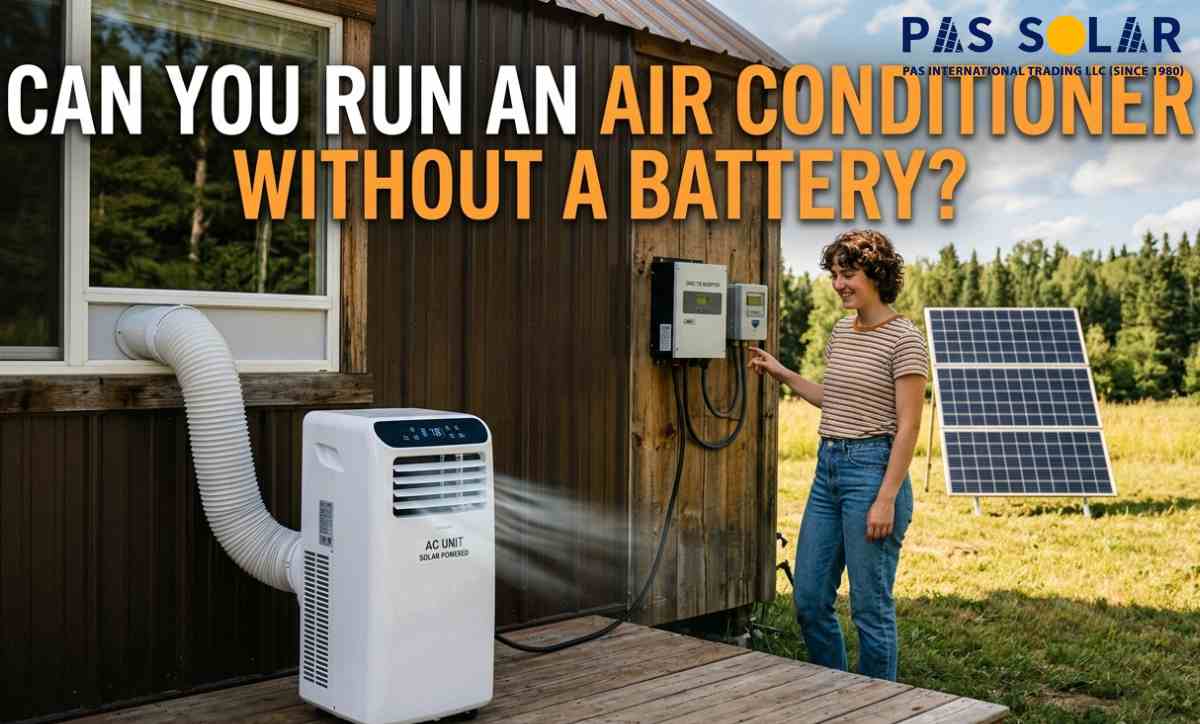
Yes, but it depends on your setup and there are some limitations.
| System Type | Batteries | How It Works | Cost Level |
| On-Grid System | Work without battery | Works AC just when sunlight is available | Lower cost |
| Off-Grid System | Totally depend on battery storage | Works day and night because of using stored energy | Higher cost |
| Hybrid System (The Best Option) | Includes batteries for backup and flexibility | Uses solar first, then depend on the grid or batteries when needed | Medium cost |
A solar AC system is not limited only to homes. It’s used for different applications:
This proves that solar energy for cooling is now more flexible than ever.
Running an AC on solar is not simple like installing panels and turning on the cooling system. It needs a suitable system, the right components, and the right tool to work correctly.
It requires:
Without proper planning, even a strong system may not work efficiently.
One of the common misconceptions is that simply increasing the number of panels will solve every problem, but it’s not. Good system design matters more, a well-designed solar AC can perform better than a large, with poor design.
The performance of a solar AC system depends on the right balance of the key components, such as:
Although solar-powered AC systems provide many advantages, there are still a few limitations, some of them are:
If these factors are not properly managed, they can affect both performance and efficiency.
Although there are some challenges, solar AC systems have several important advantages:
In sunny locations, these systems can provide excellent performance and the best return on investment.
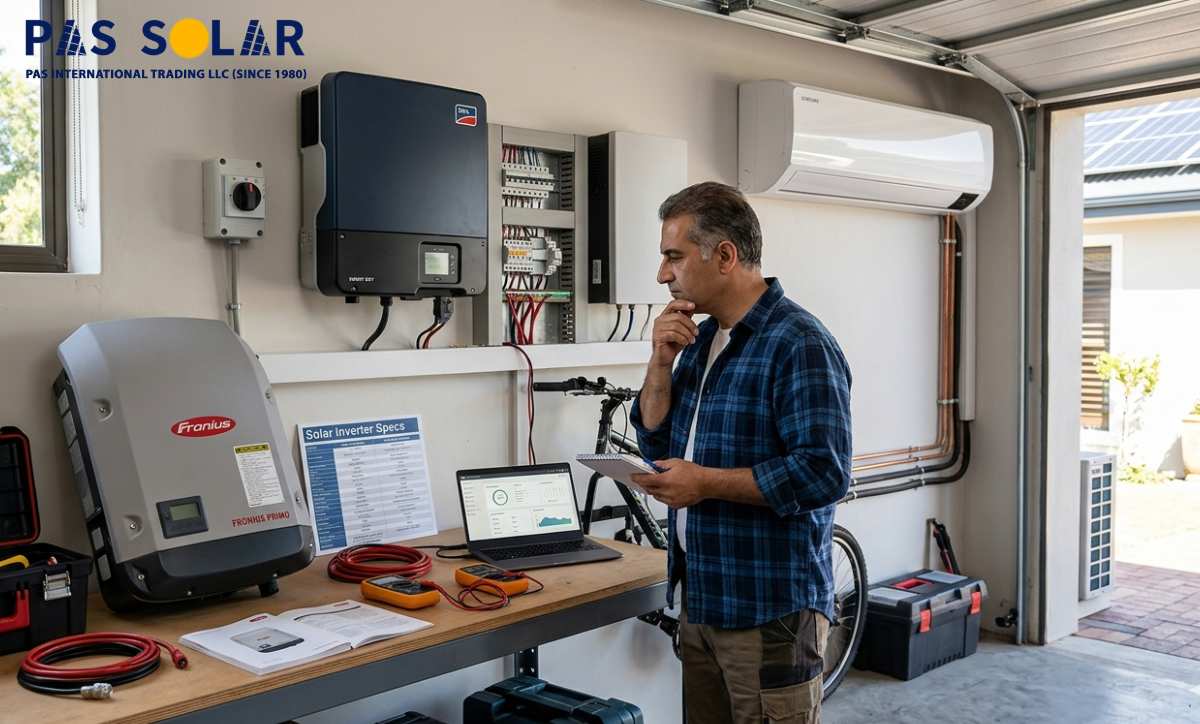
Selecting the right AC inverter setup is so important for stability and efficiency of the system.
A suitable inverter should:
For larger residential cooling systems, a growatt 12kw hybrid inverter can be considered when a system needs both efficient solar conversion and battery support for more flexible energy management.
Also, selecting the battery is really important in off-grid and hybrid systems. Lithium batteries are usually the good option because of their performance and longer lifespan.
This is where a high quality solar AC system becomes important, and makes sure that you experience stable performance, better efficiency, and fewer issues over time. Instead of guessing how many panels you need, which solar inverter for air conditioner is suitable or whether batteries are necessary. Be careful that the proper system is planned to meet all your requirements from the beginning.
Passolar is here to design the system based on your AC usage, your cooling requirement and the location. This helps the system actually work in real conditions.
So, can you run an air conditioner with solar power? yes.
But it usually relies on how well your solar AC system is. Everything matters, from choosing the number of solar panels to selecting a suitable solar inverter for air conditioner. When you do these steps right, solar energy for cooling becomes a reliable, reasonable, and sustainable choice for homes and also businesses.
If you want to run air conditioner on solar power efficiently, Pas Solar helps you have the best solar systems based on your needs.
Yes, an air conditioner can run completely on solar power if the solar system is properly sized with enough solar panels, a suitable inverter, and battery storage when needed.
A 1.5 ton air conditioner usually requires around 8 to 10 solar panels, depending on sunlight hours, panel efficiency, and daily usage time.
Yes, a normal air conditioner can run on solar energy. Most systems use standard AC units connected to solar panels through a solar inverter.
Not always. On-grid systems can operate without batteries during the daytime, while hybrid and off-grid systems use batteries for backup and nighttime operation.
The inverter size depends on the air conditioner’s power consumption and startup surge. Most residential AC systems require a properly sized inverter that can handle both continuous and peak loads.
Solar panels alone cannot run an air conditioner at night because they do not generate electricity without sunlight. Battery storage or grid power is required for nighttime cooling.
Yes, inverter air conditioners are generally better for solar systems because they consume less electricity and operate more efficiently compared to traditional non-inverter AC units.