
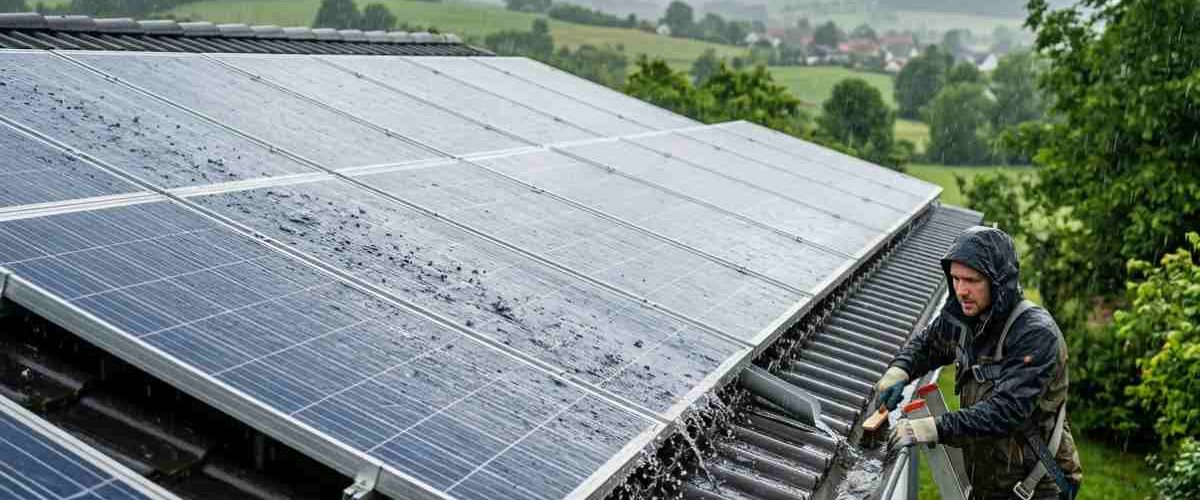
Although the solar panels continue to work and generate electricity even during the rainy day, homeowners are really worried about that. They usually ask this common questions:
Whether solar panels in rain can get damaged? if their performance declines under such bad weather?
In fact, while heavy clouds may reduce energy generation, modern solar panels are designed somehow to work well under various weather conditions, specially rainy days without getting damaged.
In this blog, we’ll follow the rain impact on solar panels, how they work in cloudy conditions, and how to ensure strong outdoor solar panel protection, even during storms and lightning.
| # | Topic | What Happens During Rain | Risk Level | Recommended Action | User Tip |
|---|---|---|---|---|---|
| 1 | Panel Waterproof Design | Solar panels are built with sealed glass and aluminum frames | Very Low | No action required under normal rain | Panels are tested for outdoor environments |
| 2 | Light Rain Impact | Rain naturally cleans dust and debris | Positive Effect | Allow natural cleaning | Rain can improve efficiency slightly |
| 3 | Heavy Rainfall | Excess water flows off panel surface | Low | Ensure proper tilt angle (10–30°) | Correct installation prevents water pooling |
| 4 | Flooding Around System | Water accumulation near inverter or cables | Medium | Elevate inverter and electrical components | Never install inverter at ground level |
| 5 | Water Leakage in Junction Box | Poor sealing may allow moisture ingress | High (if poor installation) | Inspect junction box sealing | Use IP65/IP67 rated equipment |
| 6 | Connector Moisture | MC4 connectors exposed to water | Medium | Use certified waterproof connectors | Avoid loose connections |
| 7 | Roof Leakage Risk | Incorrect mounting can damage roof waterproofing | High | Proper flashing and sealing during installation | Use professional installers |
| 8 | Lightning & Storms | Rain often comes with lightning | High | Install surge protection devices (SPD) | Grounding is critical |
| 9 | Wind + Rain Combination | Storm winds may loosen panels | Medium | Check mounting structure annually | Tighten mounting bolts periodically |
| 10 | Mud or Dirty Rain | Rain mixed with dust leaves residue | Low | Clean panels after storm | Use soft water and microfiber tools |
| 11 | Hail During Rainstorms | Hail impact may crack panels | Medium–High | Choose panels with hail certification | Most panels tested against hail impact |
| 12 | Inverter Exposure | Outdoor inverter without protection | High | Install under shade or protective canopy | Maintain airflow ventilation |
| 13 | Standing Water on Panels | Flat installation traps water | Medium | Maintain proper installation angle | Minimum tilt prevents damage |
| 14 | Corrosion Risk | Long-term moisture exposure to metal parts | Low | Use anti-corrosion mounting materials | Aluminum structures preferred |
| 15 | Cable Insulation Damage | Wet cables accelerate deterioration | Medium | Use UV & water-resistant cables | Inspect cables yearly |
| 16 | Monitoring System Alerts | Rain may trigger temporary performance drops | Low | Monitor system remotely | Output returns after weather clears |
| 17 | Post-Storm Inspection | Hidden damage after severe rain | Medium | Visual inspection after storms | Look for cracks or loose wiring |
| 18 | Cleaning Safety | Wet roofs become slippery | High (personal risk) | Avoid cleaning during rain | Safety first |
| 19 | Snow + Rain Mix | Freezing conditions stress panels | Medium | Allow natural melting | Do not scrape ice aggressively |
| 20 | Long-Term Reliability | Properly installed panels last 25+ years | Very Low | Schedule annual maintenance | Prevention reduces repair costs |
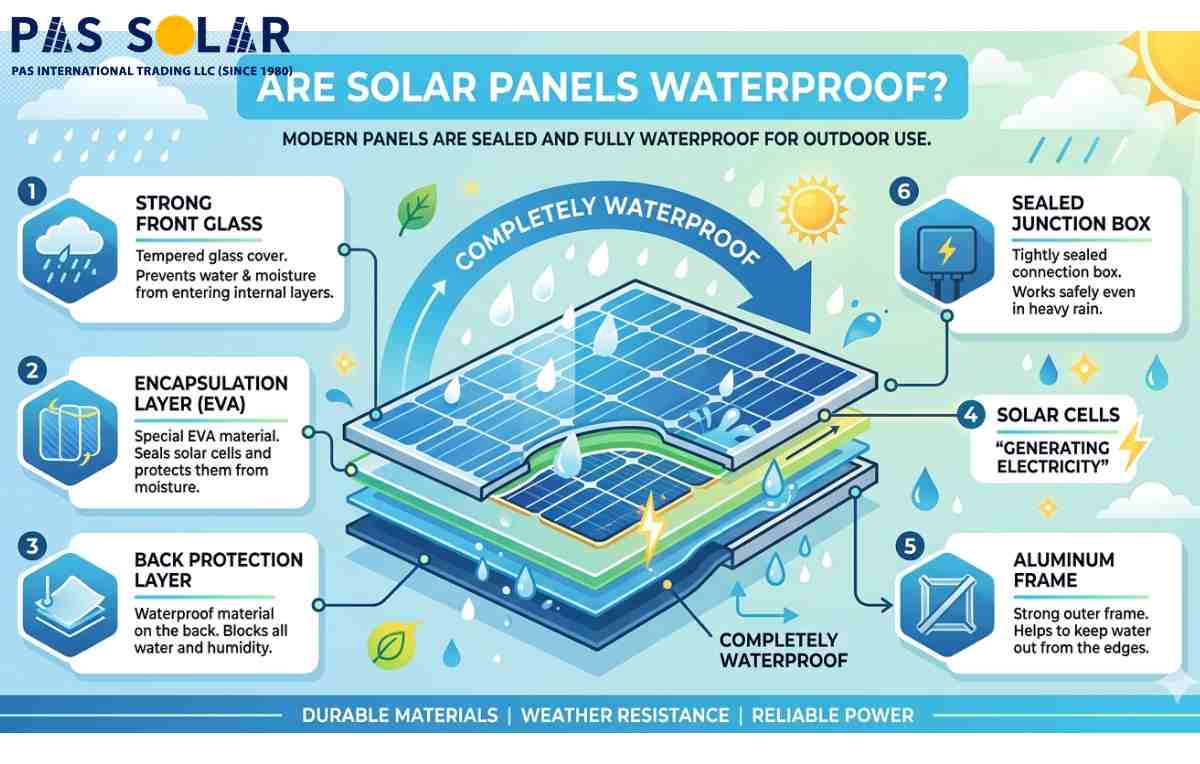
These days modern solar panels are sealed and totally waterproof to use outdoors. They are built with some material such as:
The front of the panel is covered with tempered glass that does not allow water and moisture to get inside the internal layers.
The solar cells are sealed inside a special material called EVA, which protects the cells from moisture.
The back of the panel is covered with waterproof material to block any water and moisture.
The frame around the panel helps to keep water out.
The connection box is tightly sealed and designed to work safely even in rain.
Because of all these parts, including the LITHIUM SOLAR BATTERY, you can ensure strong solar panel durability in any weather. The setups can safely work outside in rain, snow, and humid weather without getting damaged.
To understand the rain impact on solar panels, you should look at how they generate electricity when the weather is rainy.
Solar panels use photovoltaic (PV) cells which are made from silicon. When sunlight hits the solar panels and these cells. The light gives energy to electrons that create an electric current. This current becomes usable electricity
During this process, solar panels turn sunlight into electricity
Solar panels don’t depend only on strong and direct sunlight to work:
Even in rainy conditions, panels can absorb diffuse light and continue producing energy, but it is at a lower efficiency.
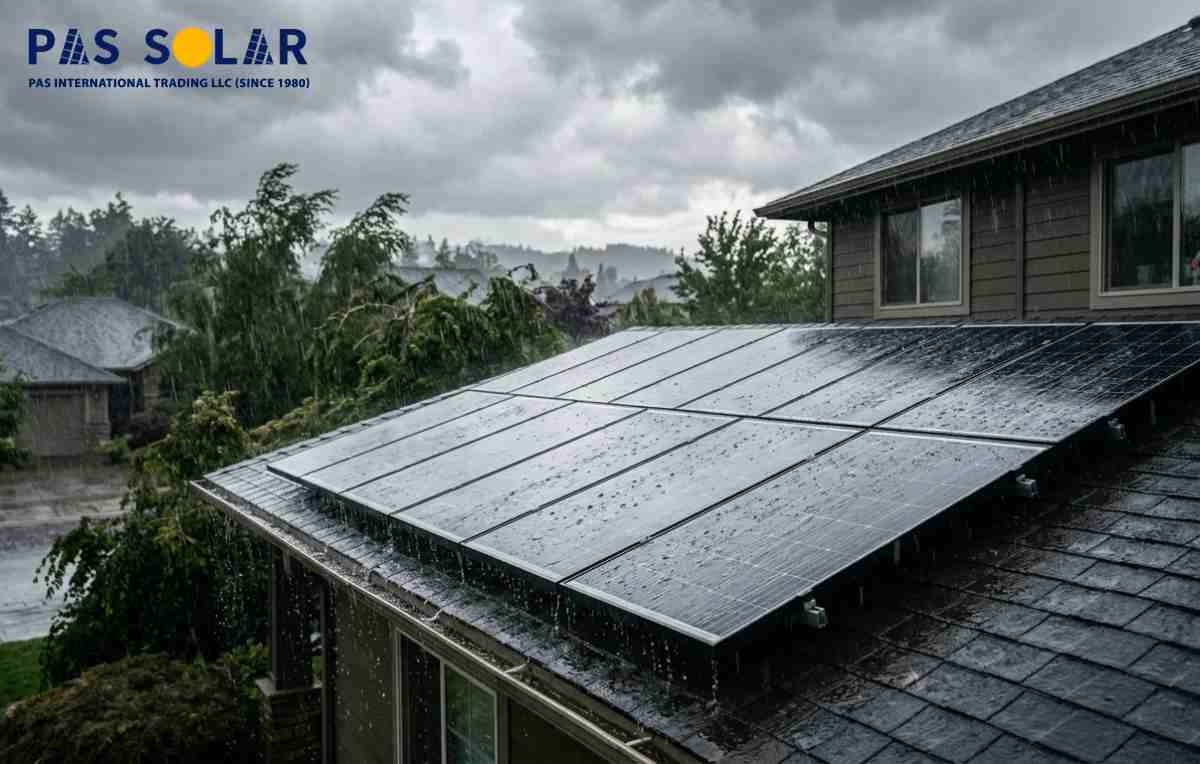
Yes, but it is a temporary phenomenon. The rain impact on solar panels is because clouds block part of the sunlight, so less energy reaches the panels .
Even so, solar panels do not stop working. They continue generating electricity, but at a lower level, which helps keep energy production going even on cloudy or rainy days.
Modern systems are designed with strong solar panel weather resistance, so under normal conditions, heavy rain, long term outdoor exposure, moisture and humidity do not cause serious damage.
But poor installation, Low quality panels and physical damage like cracks usually cause damage. This shows the importance of proper outdoor solar panel protection.
Rain alone is not a significant threat, but storms and lightning introduce additional risks. Lightning doesn’t usually hit solar panels directly, but strikes near your home can create sudden voltage spikes in the system.
The most sensitive part of the system is usually the inverter, which can be easily affected by electrical components. In order to reduce risk, solar systems use safety features such as:
With standard installation and good system design, the risk from lightning and storms is very low and can be manageable.
It may be surprising, but somehow rain can help solar panels in some ways.
Rain naturally washes dirt, dust and birds dropping from the surface of solar panels. When the panels are cleaner, they can absorb more sunlight, which helps boost their efficiency after the rain.
High heat can reduce the efficiency of the panel. Rain helps panels to be cooler and allows them to work to optimal conditions.
Solar panels are designed for all environmental conditions, not just the ideal ones. This level of solar panel durability weather ensures long-term reliability.
| Weather Condition |
Effect on Solar Panels |
|
Rain |
Experience temporary efficiency drop, but helps clean panels in the long run and make it cool |
|
Snow |
It can block sunlight, but usually slides off angled panels |
|
Heat |
High temperatures a little bit reduce efficiency |
| Wind |
If panels are installed properly, it can be safe. |
|
Hail |
Most solar panels can resist impacts, but very large or extreme hail can still cause damage. |
| Humidity |
May affect panel’s component over time, but high quality panels resist corrosion |
In areas with frequent rain, solar energy production can vary.
Battery storage systems solve this issue by:
This makes battery storage an important strategy for maximizing solar performance in all weather patterns, especially when partnering with a reliable Growatt lithium battery supplier in UAE. For solar systems that need reliable energy storage during periods of low solar production, comparing the growatt 15kw hybrid inverter price can help homeowners evaluate suitable hybrid solutions.
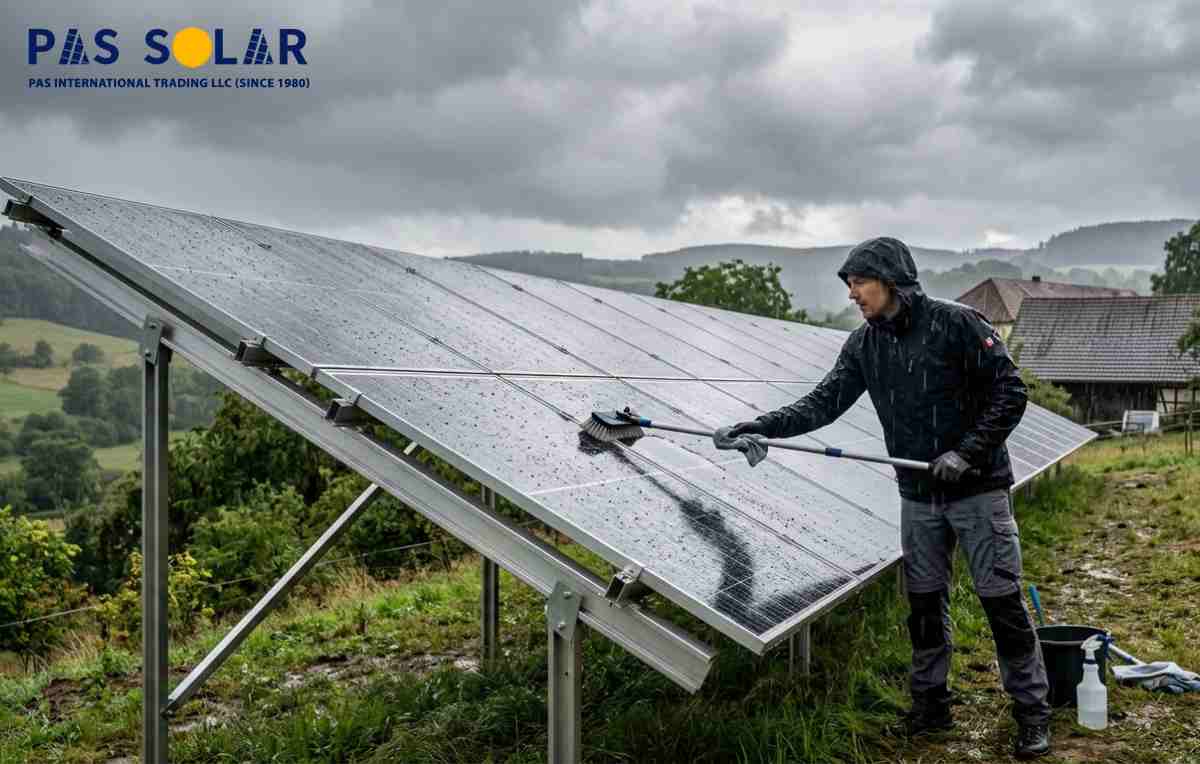
For better performance and effective outdoor solar panel protection:
At Pas Solar, we provide solar systems with advanced solar panel weather resistance and long-term durability.
Our solutions offer:
With Pas Solar, your solar investment is built to perform, rain or shine.
Modern solar panels are built to be waterproof and durable on rainy days. Although rain may temporarily decrease the panels’ efficiency because of cloud cover, it can also boost long term performance by cleaning and cooling the panels.
In addition, solar technology continues to improve. Self cleaning panels reduce the needs of maintenance, better low light performance improves output on cloudy days, and smart systems adjust operation based on real-time conditions.
With standard installation, high quality components, and smart systems, solar panels remain a dependable energy source in all weather conditions even during rain and storms.
Yes. Modern solar panels are built with waterproof layers and sealed components to withstand rain and moisture.
Normally no. High-quality solar panels are designed to resist rain, humidity, and outdoor exposure.
Solar panels may lose around 10–25% efficiency in light clouds and up to 50% during heavy storms.
Yes. Solar panels can generate electricity from diffuse sunlight even when the weather is cloudy.
Yes. Proper grounding and surge protection systems help protect solar panels during storms and lightning.
Yes. Rain can wash away dust and dirt from the panel surface and improve performance afterward.
Yes. Solar batteries store excess energy for use during cloudy or rainy periods.